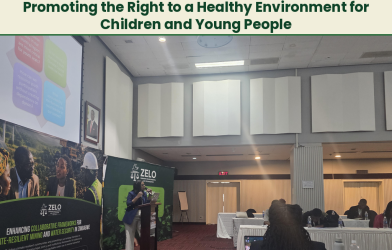





Speech was delivered at the United Nations Second World Summit for Social Development (wwssd2)-Solution Session, 6 November 2025 | Virtual (Doha, Qatar), themed, “Leveraging inclusive industrialization, value addition, and trade to address youth unemployment in Southern Africa” Hosted by UNECA in Partnership with SAYoF.
Ms. Eunice G. Kamwendo
Director, United Nations Economic Commission for Africa
Sub-regional Office for Southern Africa
- Salutations and Background
Excellency, Honorable Ts’eliso Mokhosi, Minister of Employment and Labour, Kingdom of Lesotho.
Mrs Sekai Kuvarika, Chief Executive Officer, Confederation of Zimbabwean Industries
Mr Misheek Gondo, Coordinator, SADC Youth Forum (SAYoF)
Esteemed panelists from regional and international organisations, the private sector, and academia
Fellow youth entrepreneurs and youth leaders, and advocates
Delegates based in Doha and Southern Africa
Members of the press
Ladies and Gentlemen.
On behalf of the Executive Secretary of ECA and UN Under-Secretary General, Mr. Claver Gatete, and indeed on my behalf, it is with great pleasure that I welcome you all to this Solution Session organized jointly by the ECA Subregional Office for Southern Africa (SRO-SA) and the SADC Youth Forum, and in collaboration with ECA Gender, Poverty and Social Policy Division.
I am greatly honoured to welcome His Excellency, Hon. Ts’eliso Mokhosi, Minister of Employment and Labour, Kingdom of Lesotho, to this event. Thank you, Excellency, for gracing us with your auspicious presence. Your support is highly appreciated.
This Session focuses on “Leveraging Inclusive industrialization, value-addition and trade in Southern Africa to address youth unemployment.” As you may be aware, advancing inclusive industrialization through trade to promote structural transformation in Southern Africa- and thereby create jobs, reduce poverty and lessen inequality – lies at the core of our mandate and vision at ECA Subregional office for Southern Africa. My office, Honourable Minister, covers 11 SADC member states namely Angola, Botswana, Eswatini, Lesotho, Malawi, Mauritius, Mozambique, Namibia, South Africa, Zambia and Zimbabwe.
This event comes at a critical time for Southern Africa, where youth unemployment is way above the global average, with countries such as South Africa (59.6%), Namibia 943.4%), and Lesotho (35%) recording some of the highest rates in the world. These figures mask the deep gender disparities, with young women being disproportionately affected.
Today’s conversation builds on the renewed global commitment to social development and the Doha Global Summit’s focus on inclusion and resilience, while establishing a direct link to Agenda 2063 and Sustainable Development Goal 8 on decent work and economic growth.
The challenge ahead is clear: how can we transform the region’s youthful drive, energy, and talent into a demographic dividend through industrialization, value addition, and regional trade?
- Framing the challenge
Youth unemployment in Southern Africa stands at over 34%, among the highest globally. This is not just an economic challenge—it is structural and systemic. It results from limited economic diversification, a weak industrial base, and a mismatch between the skills acquired during training and the needs of emerging sectors such as digital technologies, renewable energy, and green industry. There seems to be a lack of interest among the youth in specific sectors where potential jobs may exist, such as agriculture.
More than 70% of young workers are employed in informal or precarious conditions, with low wages, minimal protection, and limited prospects for advancement.
The challenges of youth unemployment go beyond the economic sphere to include social and political ramifications. Persistent unemployment undermines social cohesion and risks perpetuating poverty across generations. The political consequences of youth unemployment can be far-reaching and destabilizing, as evidenced by the large numbers of unemployed young people taking to the streets to demand jobs, accountability, or systemic reforms.
Yet young people are not just job seekers. They are innovators, entrepreneurs, and agents of change. To realize their potential, we must move from remedial job creation programs to structural transformation driven by inclusive industrialization and intra-African trade supported by regional integration.
- The role of the AfCFTA and industrialization
The African Continental Free Trade Area (AfCFTA) offers a historic opportunity to transform the economic structure of Southern Africa and to generate employment and entrepreneurship opportunities to reshape the economies for the subregion and Southern African youth.
Recent research by ECA shows that reducing tariff and non-tariff barriers and promoting inclusive industrialization could generate $3 trillion in intra-African trade gains by 2045.
The ECA Economic Report on Africa 2025 highlights that developing regional value chains (RVCs) is essential for the effective implementation of the AfCFTA and for the Agreement to have a truly transformative impact. Key sectors for regional value chains include processed food, tourism, health, pharmaceuticals, automotive, wood, paper, metals, other manufactured products, and to some extent, textile, apparel, and leather.
The implementation of AfCFTA also has the potential to accelerate Africa’s transition to renewables, with an estimated $22.4 billion of cumulative investments required in electricity generation, transmission, and distribution infrastructure between 2025 and 2040, with around 80 per cent of this total for renewables.
Such transformational dynamics can generate tremendous opportunities for youth to be employed in the formal sector, absorbing informality and for youth-led enterprises to participate in regional value chains.
Regional trade, powered by both the AfCFTA and the SADC FTA, can indeed open new markets for youth-led and other businesses, with strong multiplier effects on employment.
The AfCFTA protocol on Women and Youth in Trade represents a concrete initiative for advancing inclusion, ensuring that young people and women are not left behind in the new continental market. The implementation of this protocol is key, and more focus should be on lifting the binding constraints for young people to access markets, technology and finance. Efforts should be on supporting the implementation of national development plans and industrial policies to create jobs for young people.
For the AfCFTA opportunities to materialize, national industrial policies must be youth-friendly, the investment climate must be favorable, and skills and education ecosystems must evolve to meet the demands of the 21st-century industries. Above all, the Agreement must be implemented.
To fully exploit the potential of the AfCFTA, regional and national implementation frameworks must integrate youth representation into industrial policy implementation and coordination mechanisms, ensuring that young entrepreneurs and innovators are actively involved in the development of value chain development and market access initiatives.
- Value Addition and local beneficiation
Southern Africa must move beyond raw commodity exports and promote beneficiation and industrial diversification. Moving up the value chain through resource upgrading and industrial diversification is the most direct way to create decent jobs for young people.
For example, initiatives in agro-industrial processing in Zambia, green hydrogen in Namibia, and renewable energy in South Africa demonstrate that value addition can create sustainable jobs while supporting the green transition.A just transition to green industrialization can turn climate challenges into job opportunities, from assembling solar panels in Namibia and Mauritius to recycling electronic waste in South Africa- placing young people at the forefront of sustainable development. Circular economy initiatives like recycling and remanufacturing offer additional opportunities for youth entrepreneurs, but these require policy coherence and regulations that are conducive to innovation and access to finance.
- Closing the skills and finance gaps
Industrial transformation cannot succeed without addressing the skills gap that prevents many young people from entering emerging industries. There is a need for greater alignment between education systems, technical and vocational education and training (TVET) institutions, and industrial policy priorities. Public-private partnerships (PPPs) should promote skills-for-industry programs, apprenticeships, and innovation hubs that equip young people with digital and green skills demanded by the future of work. Financing is another key factor. Young entrepreneurs, especially women, face barriers to credit and investment. Innovative mechanisms, youth venture capital funds, blended finance, and guarantee schemes can unlock capital for youth-led industrial start-ups. Through its partnership with SADC and national governments, ECA continues to support policy innovation, capacity development, and regional value chain analysis to ensure that industrialization translates into inclusive job creation.
- Policy and institutional imperatives
To realize the full potential of the AfCFTA and industrialization in addressing youth unemployment, three policy shifts are necessary:
- Mainstream youth inclusion in all trade and industrial policies, not as beneficiaries, but as co-creators of the industrial transformation agenda.
- Strengthen regional value chains, particularly in agro-processing, minerals beneficiation, and green energy, to absorb youth labour across borders.
- Invest in enabling infrastructure, science, technology, and innovation, and digital connectivity, reducing logistics costs and bridging the digital divide to empower youth participation in e-commerce and cross-border trade.
- These steps require political commitment, institutional coordination, and youth representation in economic decision-making forums.
Conclusion
Excellency, Colleagues, given the challenges our sub-region is faced with, addressing youth unemployment is not an option; it is central to achieving inclusive growth and social stability in Southern Africa.We must translate policy frameworks into action using the AfCFTA Protocol on Women and Youth as a platform for transformative inclusion.As ECA we commit to continue working with the SADC Secretariat, youth organizations, and partners to develop evidence-based industrial policies, strengthen skills and education ecosystems and expand opportunities for youth entrepreneurship and value addition. Let us seize this moment to turn Southern Africa’s demographic dynamism into a force for productive growth – building an Africa that works for its youth, through trade, innovation, and industrial transformation.