



By Staff Reporter
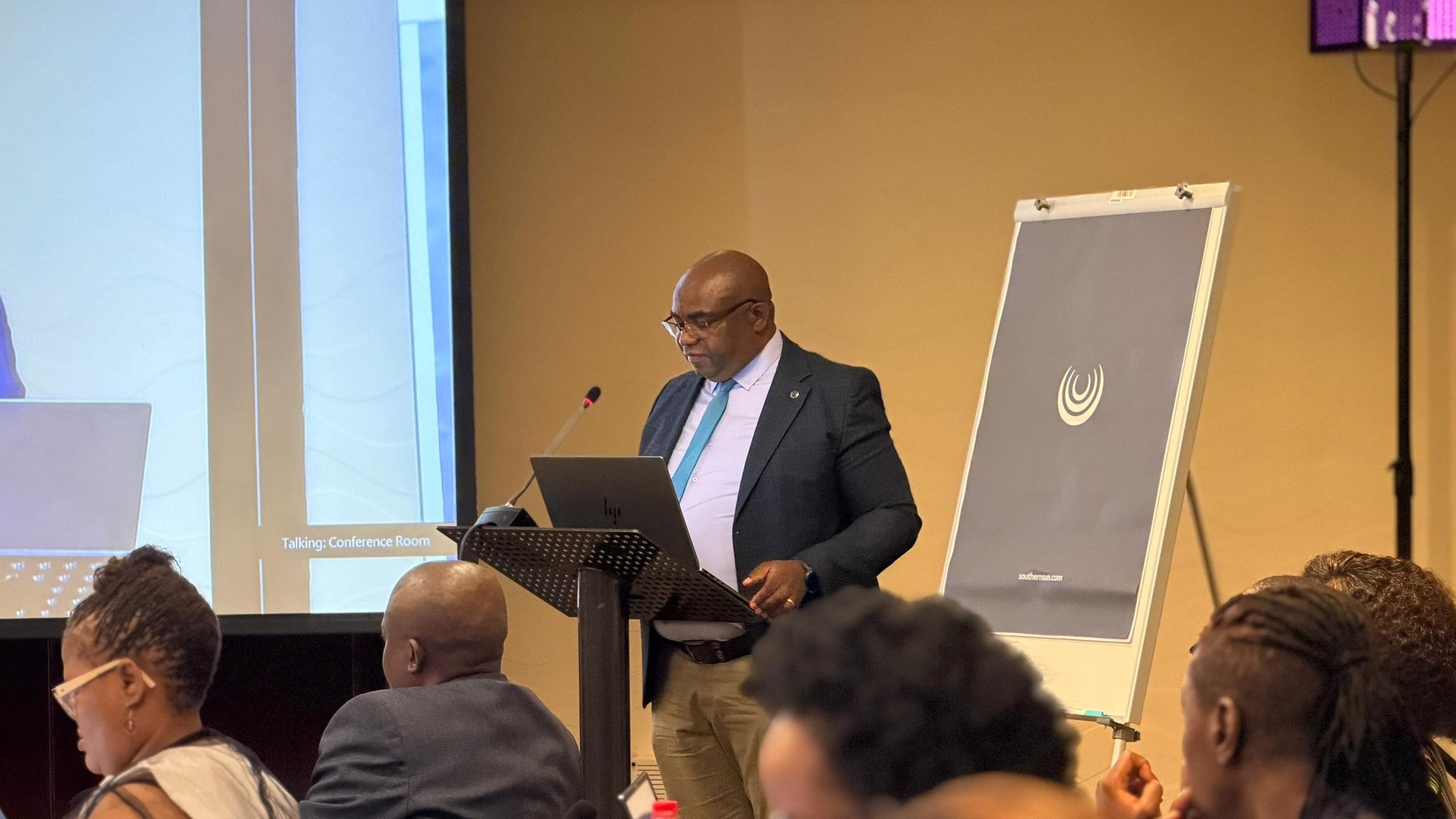
This Article is based on the presentation done by Mr Sheuneni Kurasha, the Director of Parliamentary Business & Programmes, SADC Parliamentary Forum (SADC-PF), during the Stakeholders’ Consultation on the Development of the SADC Model Law on Constitutionalism and the Rule of Law.
Regional lawmakers across Southern Africa are increasingly turning to “model laws” as a practical tool to turn high-level commitments into enforceable domestic reforms, without undermining national constitutional authority.
Model laws, often described as soft law, are not treaties and do not automatically bind governments. Instead, they are designed to be persuasive templates that Member States can adapt, debate, and, when politically and legally feasible, domesticate through national legislation. For the Southern African Development Community (SADC) Parliamentary Forum (SADC PF), this approach is central to its broader mandate: promoting harmonization, ratification, domestication, and implementation of SADC Protocols, treaties, and regional decisions at the national level.
Model laws: the “bridge” between regional aspirations and domestic legislation
According to the framework guiding the SADC PF’s model law work, the purpose of model laws is to align regional standards with legislative realities in Member States. Rather than replacing national law-making processes, model laws are intended to guide them. They offer Member States structured options for legislative reform while allowing local tailoring to fit each country’s constitutional system. In that way, model laws help translate regional commitments into workable national policy and law, while preserving constitutional sovereignty. Officials and parliamentary practitioners note that this is precisely why model laws are viewed as valuable for democratic governance. They provide a pathway for governments and parliaments to respond to regional obligations through domestic processes that remain constitutionally grounded.
Model law development sits at the core of the SADC Parliament’s role
Developing model laws is not incidental to SADC PF work, the documentation indicates; it is part of the Forum’s legislative strengthening strategy. The approach is framed as consistent with a Draft Protocol provision that supports legislative harmonization and strengthened constitutionalism and rule of law. In practice, model laws are meant to do three connected things: advance harmonization across the region, strengthen constitutional governance, and support effective implementation of regional commitments.
Five model laws, built over more than a decade
The SADC PF’s model law tradition has grown through experience and cumulative learning. Over roughly 14 years, five model laws have been adopted, each reinforcing the Forum’s capacity for consultation, drafting quality, and domestication-oriented engagement with Member States.
Those model laws include:
- 2008 – Model Law on HIV and AIDS
- 2016 – Model Law on Eradicating Child Marriage and Protecting Children Already in Marriage
- 2018 – Model Law on Elections
- 2021 – Model Law on Gender-Based Violence
- 2022 – Model Law on Public Financial Management
Taken together, the sequence highlights a strategy of progressively deepening technical processes, especially through engagement designed to support domestication, not just regional adoption.
A staged process designed for legitimacy and implementation
Rather than drafting in isolation, the SADC PF model law process is described as consultative, technical, and implementation-oriented—built as a cycle with four connected phases:
- Issue identification & initiation
- Drafting
- Approval
- Domestication, monitoring & reporting
Regional stakeholders emphasize that formal adoption by regional bodies matters, but the true test of impact occurs only when Member States domesticate and implement the model law nationally. The workflow, as outlined for the SADC Model Law on Constitutionalism and Rule of Law (SMLCR), illustrates how the initiative moves from political mandate to a text ready for parliamentary validation and national implementation planning.
Initiation: plenary resolution and stakeholder dissemination
The process begins with a recommendation to the Plenary from relevant organs. The Plenary issues a resolution, after which the initiative is disseminated to stakeholders and partners; an early step intended to build coordination and legitimacy.
Drafting: multi-stakeholder input and legal precision
Drafting is presented as a participatory sequence. It includes multi-stakeholder consultations focused on scope, processes, resources, and partnerships, followed by the appointment of technical and legal drafting structures, such as:
- Technical Working Group (TWG)
- Legal drafter(s)
The process also involves research and production of a policy paper, drafting, and multiple rounds of legal and parliamentary review. Importantly, it includes reviews by legal drafters from Member State parliaments and ministries, further TWG review, and citizen and stakeholder consultations; steps intended to ensure the final instrument is both legally precise and politically credible.
Approval: validation through parliamentary committee structures
Following drafting reviews, the model law moves into approval and validation stages, including a review by a joint sitting of standing committees, validation by the Standing Committee and TWG, and final plenary approval. Only after these steps does the model law progress toward adoption and implementation planning.
Domestication, monitoring, and reporting: the “success test.”
The documentation is clear: adoption is not implementation. Member States are expected to translate regional principles into national legal frameworks through advocacy with parliaments and stakeholders, needs assessment and gap analysis, and coordinated domestication planning involving multiple actors. The framework also highlights the importance of monitoring, evaluation, and reporting, plus sustained follow-up through relevant coordination structures and national focal points. Without that architecture, even a well-drafted model law can remain a regional reference document rather than becoming national law.
Background and mandate: SMLCR is anchored in constitutional governance pillars
The SADC Model Law on Constitutionalism and Rule of Law (SMLCR) is framed as a strategic initiative to strengthen constitutional frameworks and democratic governance across the region. A formal mandate emerged from the 49th Plenary Assembly held from 25 to 27 June 2021, which resolved to initiate development of a SADC model law on constitutionalism and the rule of law. The resolution provides institutional grounding for the initiative.
The model law is built around constitutional governance pillars, including:
- constitutional supremacy
- separation of powers
- judicial independence
- accountability and transparency
- respect for human rights
The initiative is also described as anchored in regional and international instruments, including the SADC Treaty and the African Charter on Democracy, Elections and Governance (ACDEG).
Why is the model law being pursued now?
The case for the SMLCR is presented through three linked arguments. First, uneven legislative frameworks across Member States are seen as a challenge for democratic governance and citizen accountability; areas where consistent legislative standards can support legitimacy and protect rights. Second, the SMLCR is described as adopting an ecosystem approach rather than focusing on parliament alone. It is meant to reflect how constitutionalism becomes real through the interaction of multiple institutions, including judicial bodies, executive authorities, electoral institutions, human rights mechanisms, civil society, and other accountability actors. Third, the initiative is positioned as a resilience tool. By strengthening constitutional safeguards and governance standards through domestic legislation, the model law is intended to support Member States facing risks of constitutional erosion and democratic backsliding.
Lessons from earlier model laws: partnerships, timing, and early engagement
The process draws cross-cutting lessons to improve the effectiveness of future model laws.
- Partnerships matter: High-quality model laws require technical partners, subject experts, skilled legal drafters, and broad stakeholder buy-in.
- Time management matters: Development can run parallel to national legislative review cycles, but timing must be reasonable to influence legislation without rushing contentious negotiations.
- Policy papers are essential: Policy papers provide conceptual clarity before drafting and help prevent scope creep.
- Early public engagement builds legitimacy: Media involvement and public consultation are seen as important for creating political and social momentum for implementation.
The domestication challenge: closing the “implementation gap.”
A recurring message is that adoption does not guarantee impact. The model law strategy therefore emphasizes domestication as a structured national process, supported by coordinated stakeholder engagement, monitoring and reporting mechanisms, and advocacy to help national lawmakers understand and support legislative reform. Ultimately, success depends on converting “regional principles” into “national law” in a way that is operational, measurable, and locally feasible.
The bigger picture: three takeaways on what model laws achieve
Summarizing the model law approach, the framework presents three key outcomes:
- Model laws act as catalysts for progressive legislative reform.
- They strengthen the quality and credibility of democratic processes.
- They provide a collective regional response to emerging governance challenges.
What happens next for the SMLCR
The SMLCR is described as a milestone for democratic governance, human rights, and institutional accountability across the SADC region. Stakeholders say the long-term impact will depend on sustained political will, inclusive stakeholder engagement, and careful balancing between:
- regional standards (baseline integrity and rule-of-law expectations), and
- national ownership (fit within each Member State’s constitutional sovereignty and legislative realities). sectioning, more “reported” quotes, and attribution style).