



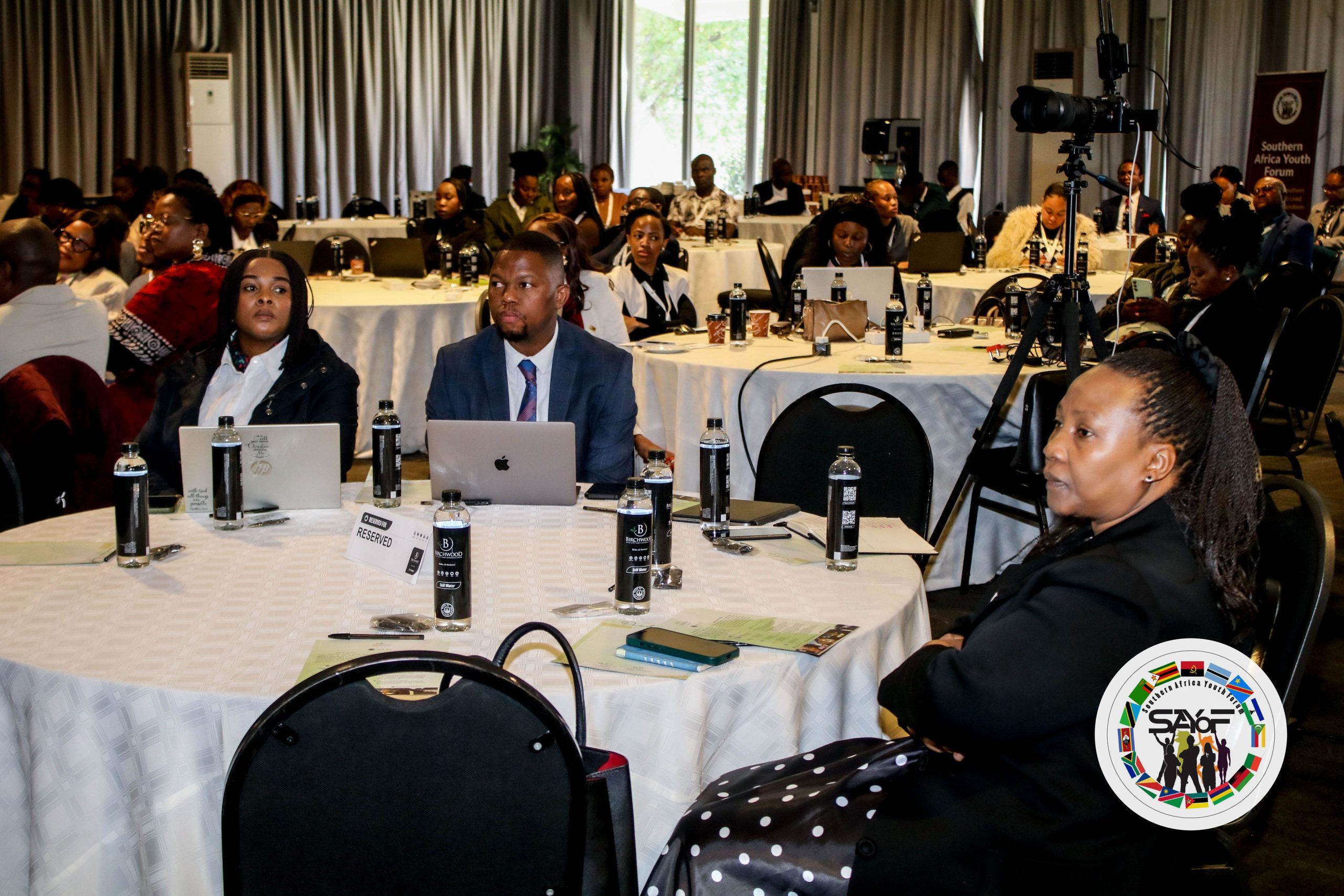
Remarks by Sekoetlane Phamodi, Founder and Director, New Economy Hub, during the 8th Southern Africa Youth Forum Official Opening, Johannesburg, South Africa.
Program Director,
Excellencies
Distinguished Guests
Good morning to you all,
As you’ve heard, my name is Sekoetlane Phamodi, and I lead the New Economy Hub where we work with leaders, civic formations and campaigners to advance new, socially inclusive and ecologically sustainable economies in Africa.
I am sorry I could not be there with you in person today; however, I am very grateful to the convenors for affording me the opportunity to join you virtually to make my remarks.
It’s a great privilege for us to be able to support this 8th Southern African Youth Forum. Africa’s youth are the world’s youth. As we know, by 2030, 1 in 4 of the world’s population will be a young African. This demographic dividend presents an enormous opportunity for Africa’s development prospects insofar as we invest in the capability and leadership of young people to claim Africa’s place in the world and shaping its outcomes. This is why it is important to us at the New Economy Hub that we work with young leaders such as yourselves, and afford you the opportunity to shape the present and future economy on a sustainable path so you do, indeed, have a future to claim.
Doing this is especially important for us, here, in the continent where the legacy of colonialism, extraction, and underdevelopment continues to threaten the promise of sovereignty, self-sufficiency, and sustainability. Human-caused climate change is deepening these threats.
Southern Africa is a climate hotspot, with much of the interior on the continent set to become hotter and drier. Desertification is steadily creeping into the interior of the continent from the Western seaboard, while the Eastern seaboard and island states in the Indian Ocean are experiencing a greater frequency of higher-intensity tropical cyclones.
We are all living these devastating effects which are unfolding in real time.
We are seeing these tropical cyclones destroy port, rail and road infrastructure and costing us hundreds of millions in USD-denominated loans. Our already strained health systems, emergency response and social services are buckling under the additional weight of their aftermath. Our crops are failing because we neither have the water resources nor the resilient seed stock that is adapted to evolving climatic conditions such as extreme heat and water scarcity. Labour productivity is set to decline because of automation, on the one hand, and our inability to tend our crops and livestock as a direct result of rising temperatures, on the other. I could go on.
As we know, the root cause of these problems is burning fossil fuels at the rate that we have been doing since the 1800s in the name of industrialisation and progress. Powering our economies has depended on burning coal and diesel; fertilizing our crops has depended on pumping gas; moving goods to market has depended on petroleum-based fuels. But all of this is dooming our present just as much as it is our futures, and those of generations still to come.
The Hormuz crisis is already demonstrating how fragile we are to cascading climate shocks. The war over there – which is about preserving the hegemony of the fossil fuel economy – is translating into a fertiliser availability, access, and affordability crisis here at home. The super El Niño gathering in the South Pacific as we speak has guaranteed us, at the same time, prolonged extreme heat, below-average rainfall, and a significant delay to the summer rains we rely on to be assured our food and economic security. And all of this is happening just as we approach our planting season.
The convergence of these crises is proving that we have to open ourselves a path to resilience. That path will be one that reduces our industrial dependence on the fossil fuel economy. It will be one that rebalances our relationship with the ecology that forms the very basis of our economy. And it will be one that sets the conditions for our shared prosperity not just today, but for the generations still to come. It will be up to you to determine what kinds of leaders for yourselves and your ancestors to your childrens childrens you will be, in what you ultimately agree to be the necessary response to these multiple and cascading emergencies that we can all agree are not of our making, but which you can all play your part in interrupting.
We at the New Economy Hub wish you productive deliberations and a very successful Forum as you define the path to socially inclusive and ecologically sustainable economies in Southern Africa.
Thank you.