



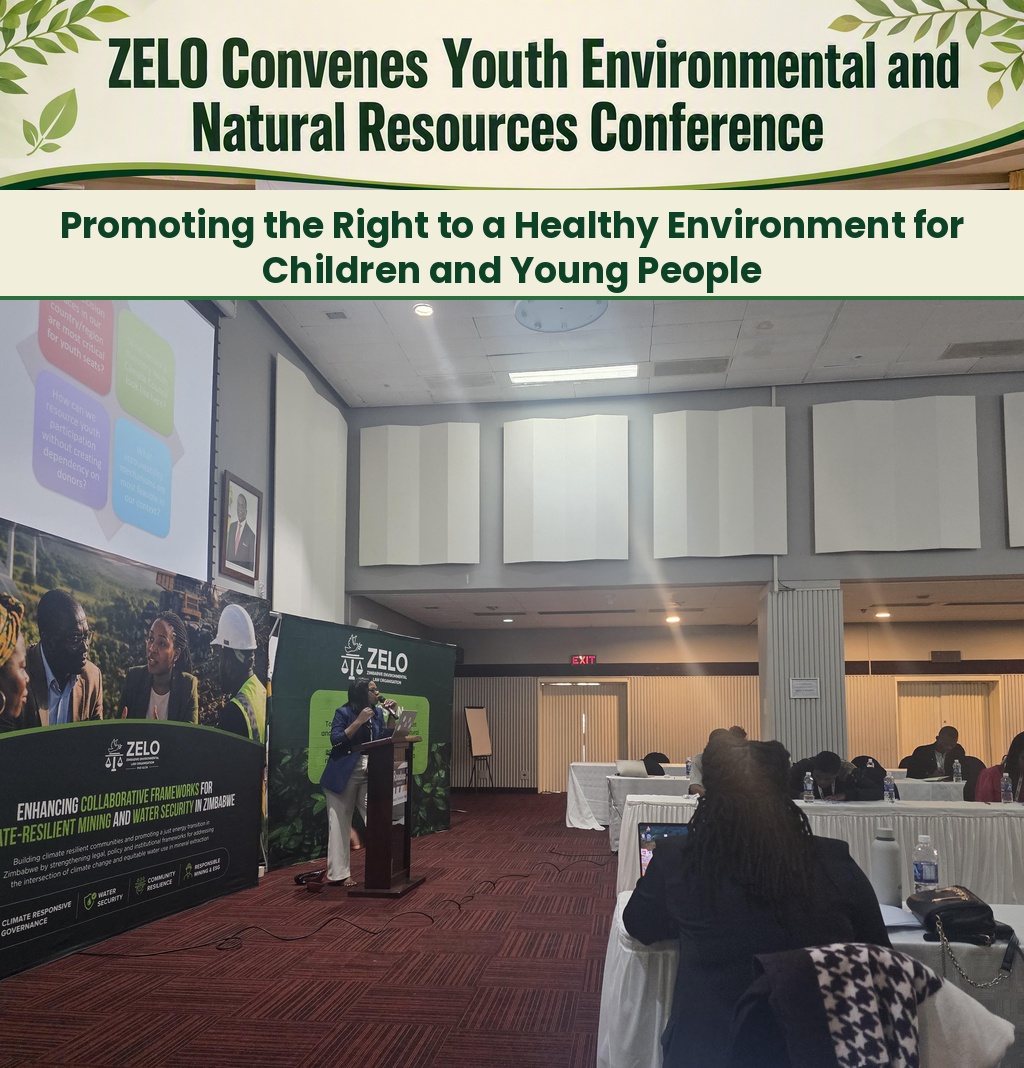
As the Zimbabwe Environment Law Organisation (ZELO) convenes the youth conference in Bulawayo, Zimbabwe, Africa is facing accelerating climate and environmental pressures: floods, droughts, biodiversity loss, water shortages, and growing inequality, yet children and young people continue to shoulder some of the heaviest impacts while contributing the least to the crisis. To address this gap, the 2026 ZELO Youth Environmental and Natural Resources Convening is uniting youth innovators and environmental leaders, strengthening community-driven action, and mobilizing investment toward community-centred climate solutions. The convening is running from 11 to 12 September 2026, feeding into ZAMI.
ZELO’s convening is grounded in the conviction that youth must be more than symbolic participants; they should be leaders, co-creators, implementers, and decision-makers in climate and environmental governance. Building on ZELO’s prior work, including the School of Environmental Advocacy (SEA), which equipped community monitors with skills in environmental monitoring, evidence collection, and evidence-based advocacy, the 2026 forum will advance advocacy from awareness-raising toward influencing governance systems, with a particular emphasis on Environmental Innovation, conservation, and sustainable investment.
A central focus of the convening is evidence-based advocacy. As Zimbabwe’s critical minerals sector evolves, alongside policy reforms such as developments around the Mines and Minerals Bill, changing responsible sourcing expectations, and increasing Environmental Social Governance (ESG) performance demands, community monitors and youth advocates must be prepared with credible evidence, strategic engagement, and adaptive advocacy approaches. The forum therefore aims to strengthen advanced competencies in critical minerals governance, climate adaptation, environmental justice, responsible mining standards, and community safeguarding, so that communities can influence duty bearers while improving transparency and reducing social conflict. During the first day, Dr S. Nkomo from Terre Des Hommes outlined effective youth participation, accountability mechanisms, how we can resource youth participation without creating dependancy to donors, and increase youth participation, decision spaces that youth can occupy and influence as leaders for transformation.
The expected outcome is not only stronger youth leadership and multi-stakeholder collaboration, but also improved district-level implementation through updated advocacy plans, clearer stakeholder engagement strategies, and stronger networks of community advocates able to contribute evidence into district, national, and international mineral governance processes. Documenting and elevating African climate solutions and indigenous knowledge systems, while connecting innovators to partnership-building and sustainable investment, the convening seeks to ensure that conservation efforts and environmental stewardship translate into practical, scalable action. The forum is also being attended by national and regional partners such as the Southern Africa Youth Forum (SAYoF), Terre Des Hommes, SADC Youth Parliament, African Union Youth Advisory Board on Risk Reduction, UNICEF, among others.